
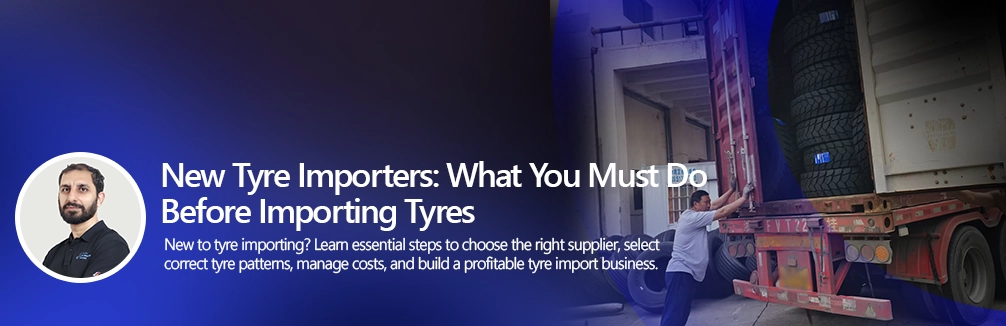
Entering the tyre import business can be highly profitable—but only if done correctly. Many new importers focus only on price, but in reality, success depends on planning, product understanding, and choosing the right partners.
If you’re new to the tyre business, here are the most important steps you should take before placing your first order.
1. Understand Your Market First
Before importing tyres, study your local market carefully.
• Which tyre sizes are in high demand?
• Which segments dominate (PCR, TBR, OTR)?
• What road conditions do vehicles operate on?
• Who are your competitors and what are they selling?
Example: In many developing markets, 315/80R22.5 and 295/80R22.5 are high-demand TBR sizes due to heavy transport usage.
Key Point: Don’t import what is cheap—import what sells.
2. Choose the Right Supplier (Not the Cheapest)
One of the biggest mistakes new importers make is chasing low prices.
Low-cost tyres may result in:
• Poor mileage
• Weak casing (no retread value)
• Customer complaints and claim losses
Instead, choose a supplier who offers:
• Consistent quality
• Strong casing durability
• Technical support
• Certifications (E-mark, ISO, etc.)
Remember: Your reputation depends on your tyre performance, not your purchase price.
3. Select the Correct Tyre Pattern & Application
Not every tyre fits every application.
You must match:
• Long haul → Fuel-efficient, low heat patterns
• Mixed road → Durable, cut-resistant patterns
• Construction/mining → Deep tread, strong sidewall tyres
Selling the wrong pattern can lead to:
• Irregular wear
• Sidewall failure
• Early replacement
Right pattern = Better performance + Happy customers
4. Plan Your First Order Smartly
Avoid overstocking or wrong SKU selection.
Start with:
• Fast-moving sizes
• Balanced quantity (not too many slow-moving items)
• 1–2 containers maximum for testing the market
A smart mix helps you:
• Reduce inventory risk
• Improve cash flow
• Test customer feedback
5. Understand Total Cost (Not Just Price)
Your actual cost includes more than tyre price:
• Freight charges
• Customs duties
• Port charges
• Certification costs
• Local transportation
Sometimes a “cheaper tyre” becomes more expensive after all costs.
Focus on: Cost per kilometer, not cost per tyre.
6. Prepare All Required Documents
Ensure all documents are ready before shipment:
• Commercial Invoice (CI)
• Packing List (PL)
• Bill of Lading (BL)
• Certificate of Origin (COO)
• Certifications (E4 / SONCAP / etc. depending on country)
• Insurance
Missing documents can delay clearance and increase costs.
7. Build Long-Term Supplier Relationship
Don’t treat your supplier as just a seller—build a partnership.
A good supplier will:
• Support you in pricing strategy
• Help in market development
• Provide marketing materials
• Assist in claims and technical issues
Long-term cooperation = stable growth
8. Plan Your Sales Strategy Before Arrival
Many importers make a big mistake—they import first and plan later.
Instead:
• Identify your target customers (dealers, fleets, wholesalers)
• Prepare price strategy
• Start pre-selling before shipment arrival
This ensures faster stock movement and better cash flow.
Final Advice
The tyre business is not about buying and selling—it’s about understanding performance, application, and market needs.
If you focus only on price, you may win the first sale…
But if you focus on quality and strategy, you will win the market.
Pro Tip:
Right product + Right supplier + Right strategy = Long-term success
Start Strong with the Right Tyre Partner
Entering the tyre import business or planning your first shipment?
Partner with Trojan – The Global Tyre Company to gain access to consistent quality, expert guidance, and reliable global supply tailored to your market needs.
👉 Connect with us today and build a profitable, long-term tyre business with confidence.