
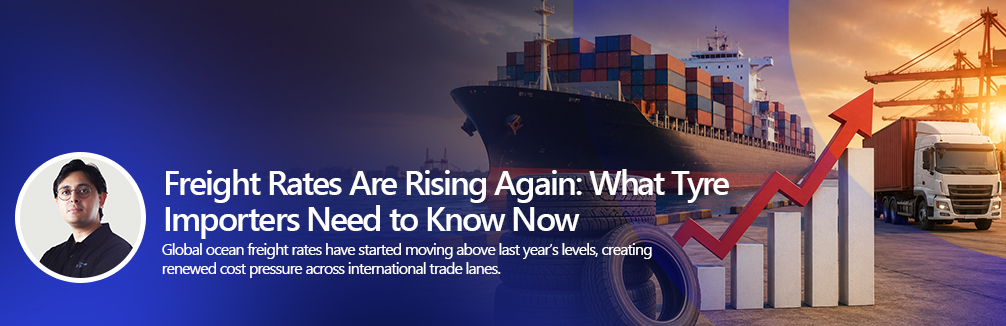
Global ocean freight rates have started moving above last year’s levels, creating renewed cost pressure across international trade lanes. This shift is not driven by seasonal demand alone, but by tighter shipping capacity, operational constraints, and higher fuel-related expenses.
For industries dependent on container movement — such as tyre exports — this change has direct and practical implications.
One of the key developments is increasing export cost pressure. Tyres are high-volume and weight-sensitive products, meaning freight plays a significant role in total landed cost. Even a moderate rise in ocean freight rates can significantly affect pricing competitiveness in overseas markets.
Another important factor is vessel availability and booking pressure. With limited space and more cargo competing for slots, exporters are facing tighter schedules and reduced flexibility. This often leads to earlier planning requirements and longer decision cycles between buyers and suppliers.
At the same time, fuel costs and operational surcharges continue to influence overall freight pricing. These additional charges are usually passed along the supply chain, directly impacting importers and distributors.
What tyre importers should focus on right now
In this environment, importers can reduce risk and cost impact through a few practical strategies:
- Plan shipments earlier to secure space before peak congestion builds up
- Avoid last-minute bookings, which often come with higher freight premiums
- Consolidate orders wisely to optimize container utilization and reduce per-unit freight cost
- Diversify shipping schedules instead of relying on single large shipments
- Work closely with exporters on forecasting, so production and booking align smoothly
- Evaluate total landed cost, not just product price, when comparing suppliers
These adjustments help maintain stability even when freight conditions fluctuate.
For tyre exporters and importers, this environment highlights an important reality: logistics planning is now a core part of business strategy, not just transportation execution.
At our end, we continuously monitor freight trends and support customers with practical shipping guidance based on real market conditions. If you need professional advice on planning, sourcing, or managing tyre shipments in the current freight environment, feel free to reach out to us — we are always happy to assist with experienced, industry-based support.