
A Critical Global Trade Chokepoint
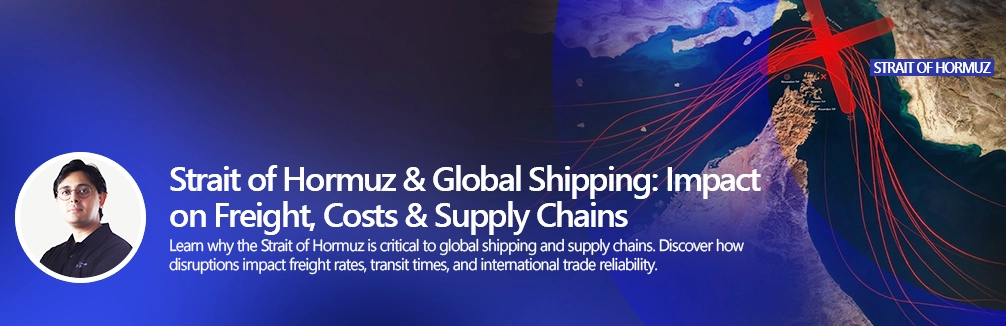
The Strait of Hormuz is one of the most critical maritime chokepoints in global trade. Connecting the Persian Gulf to the Arabian Sea, it handles roughly one-fifth of the world’s oil shipments, along with significant volumes of LNG and general cargo. For logistics and shipping, this narrow passage is not just a route, it is a lifeline for energy supply chains and international trade flows.
Impact on Logistics and Freight Dynamics
From a logistics perspective, the Strait plays a key role in transit efficiency, freight costs, and supply reliability. Any disruption here directly impacts vessel schedules, increases insurance premiums, and creates volatility in freight rates. Shipping lines often have limited alternatives, making rerouting costly and time-consuming.
Rising Geopolitical Risks and Operational Challenges
Currently, ongoing geopolitical tensions and conflict in the region have heightened risks. Increased naval activity, potential blockades, and security threats have led to delays, higher war-risk surcharges, and cautious vessel movement. Many shipping companies are either slowing transit, increasing security protocols, or reconsidering routes altogether.
What This Means for Importers and Exporters
For importers and exporters, this translates into longer lead times, fluctuating freight costs, and uncertainty in delivery schedules. Industries heavily dependent on fuel, including transportation and manufacturing, are also experiencing cost pressure.
Conclusion: A Strategic Bottleneck for Global Trade
In summary, the Strait of Hormuz is a strategic bottleneck where any instability has immediate global logistics consequences. Businesses involved in international trade must closely monitor developments, diversify supply chains where possible, and plan proactively to manage risks associated with this critical corridor.
At Trojan – The Global Tyre Company, we understand that global logistics disruptions directly impact our partners, from tyre importers to fleet operators. In an environment where key trade routes like the Strait of Hormuz influence freight costs and delivery timelines, reliability and proactive planning become essential. Our focus remains on ensuring consistent supply, transparent communication, and strategic sourcing to help our partners navigate uncertainty and maintain business continuity across global markets.